Locations › Ventura County › Thousand Oaks
Lynn Eye Medical Group Thousand Oaks
4.8 on Google · 703 Thousand Oaks patient reviews
Eye Surgery and Eye Care Services in Thousand Oaks, CA
At Lynn Eye Medical Group, we offer the utmost in quality eye care to patients within Ventura County. We provide leading-edge specialist care for all ophthalmologic procedures and specialize in cataract surgery.
Cataract Surgery in Thousand Oaks, CA
Cataracts develop when the natural lens of the eye becomes cloudy, usually due to aging or other factors (like injury, genetics, or certain medications). This clouding obstructs vision: at the beginning, it may be treated with glasses, but once the cataract advances surgery is required to recover clear vision.
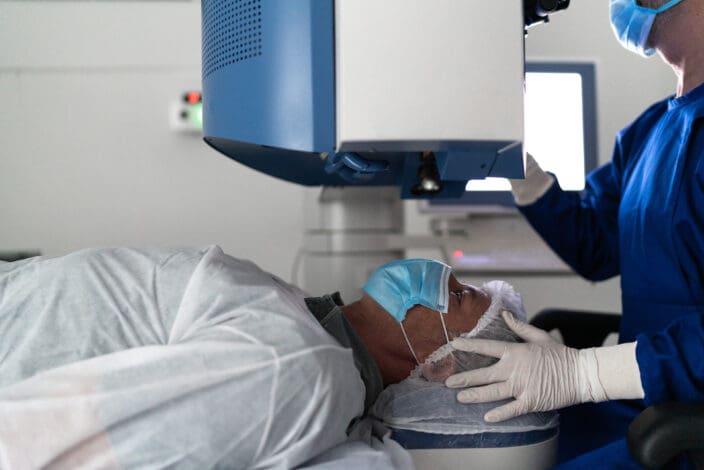
During cataract surgery, the cloudy lens is replaced with an artificial one, typically resulting in improved vision and quality of life. There are several Intraocular Lens (IOL) options available.
For all your Eye Care Needs in Thousand Oaks, CA
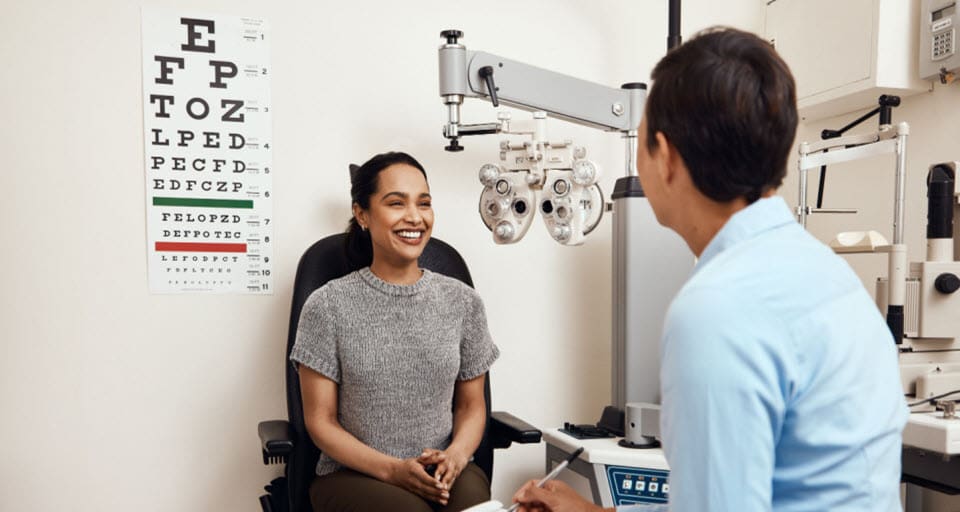
At our Thousand Oaks clinic, we offer a range of services aimed at maintaining eye health beyond cataract removal. We conduct comprehensive eye exams to assess visual acuity, prescribe eyeglasses or contact lenses, and diagnose and treat various eye conditions like glaucoma, pterygium, and macular degeneration, among others.
Why Patients Choose NVISION in Thousand Oaks

99% SUCCESS RATE 99% of our patients see 20/20 or better after vision correction surgery at NVISION.
PROVEN TRACK RECORD Our experienced surgeons have performed over 2.5 million vision correction procedures.
LIFETIME COMMITMENT If a future enhancement is needed, qualified patients receive a same-technology enhancement procedure free of charge.
Vision Correction Procedures in Thousand Oaks
Today's life-changing procedures make it possible to improve your vision to 20/20—or better.

Other Procedures
Lifestyle Lenses
Lifestyle lenses are a premium lens option that offers a more functional range of vision, and are designed to reduce the need for distance and reading glasses.
We offer the latest and most advanced lifestyle lens on the market.
PRK Surgery (Photorefractive Keratectomy)
What is PRK Surgery?
PRK Surgery (Photorefractive Keratectomy) is a type of laser eye surgery that is used to correct refractive errors such as nearsightedness (myopia), farsightedness (hyperopia), and astigmatism. PRK is an alternative to LASIK eye surgery and is particularly suitable for individuals who may not be candidates for LASIK due to certain corneal characteristics.
Overview of the PRK surgery process:
- Corneal Epithelium Removal:
- In PRK, the surgeon begins by removing the thin outer layer of the cornea called the epithelium. This can be done using an alcohol solution, a special brush, or a laser.
- Laser Reshaping of the Cornea:
- Once the epithelium is removed, a laser is used to precisely reshape the cornea. The laser ablates or removes microscopic amounts of corneal tissue based on the patient’s refractive error. The goal is to correct the curvature of the cornea and improve the focus of light on the retina.
- Healing Process:
- Unlike LASIK, where a corneal flap is created, PRK does not involve creating a flap. Instead, the corneal surface is allowed to regenerate naturally. The healing process involves the growth of new epithelial cells over the treated area.
- Post-operative Care:
- Following PRK surgery, patients are given medicated eye drops to aid in the healing process and prevent infection. Recovery may take a bit longer compared to LASIK, and patients may experience temporary discomfort during the initial days.
Key considerations for PRK surgery include:
- Corneal Thickness: PRK may be a suitable option for individuals with thinner corneas who may not be ideal candidates for LASIK.
- Occupational Considerations: PRK may be recommended for individuals with occupations or lifestyles that carry a risk of corneal injury, as it eliminates the creation of a corneal flap.
- Healing Time: The initial visual recovery may take longer with PRK compared to LASIK. Patients typically experience optimal vision several weeks after the procedure.
PRK is a well-established and effective procedure for vision correction, and its suitability depends on individual factors. It’s important to consult with an experienced refractive surgeon or eye care professional to determine the most appropriate laser eye surgery option based on your eye health and lifestyle.
Valeda Photobiomodulation
Valeda Photobiomodulation is the first FDA-authorized light-based treatment designed specifically for patients with dry age-related macular degeneration (AMD). Using gentle pulses of red, yellow, and near-infrared light, Valeda helps energize the cells in your retina, reduce inflammation, and slow the progression of disease. Clinical studies show that patients treated with Valeda not only maintain their vision longer but can also experience meaningful improvements in visual acuity.
The treatment is quick, noninvasive, and completely painless—no needles, drops, or anesthesia are required. Each session takes just a few minutes, and a short series of treatments can help preserve your eyesight and protect against future vision loss. Valeda offers new hope for people living with dry AMD by treating the root causes of retinal damage and supporting healthier vision for years to come.
Pterygium Surgery
Pterygium surgery is performed under topical anesthesia on an outpatient basis.
Dry Eye Treatment
Dry eye is an irritating, painful, and common condition in which the eye fails to properly produce quality tears. When left untreated, it may lead to ulcers and scars on the cornea.
Depending on the severity of your condition, there are a variety of treatments to relieve dry eyes.
Laser Blepharoplasty
Laser blepharoplasty eye surgery, also known as laser eyelid surgery, is a surgical procedure to rejuvenate eyelid tissues (skin, muscle, or fat). Blepharoplasty is performed for both cosmetic and vision correction purposes. NVISION has an eye clinic to help address your needs – Book a consultation today.
Pediatric Strabismus Surgery
Pediatric strabismus surgery is a surgical procedure performed to correct misalignment of the eyes in kids with strabismus—characterized by an imbalance in the muscles that control eye movement, resulting in both or one eyes turning inward (esotropia), outward (exotropia), upward (hypertropia), or downward (hypotropia).
The goal of pediatric strabismus surgery is to realign the eyes, allowing them to work together properly and improving binocular vision. The procedure involves adjusting the tension or position of the eye muscles to achieve proper alignment.
Glaucoma Surgery
Glaucoma surgery encompasses various surgical procedures aimed at reducing intraocular pressure (IOP) to prevent or slow down the progression of glaucoma—a group of eye conditions characterized by damage to the optic nerve, often associated with elevated IOP.
There are several types of glaucoma surgery, including:
1. Trabeculectomy: This is one of the most common surgical procedures for glaucoma. During a trabeculectomy, a small flap is created in the sclera (the white part of the eye), allowing aqueous humor (the fluid inside the eye) to drain out of the eye and reduce IOP. Sometimes, a small device called a shunt or a drainage tube may be used to facilitate drainage.
2. Glaucoma Drainage Implants: Also known as glaucoma shunts or tubes, these devices are implanted into the eye to help drain aqueous humor and lower IOP. They are often used when other forms of glaucoma surgery, such as trabeculectomy, have not been successful.
3. Minimally Invasive Glaucoma Surgery (MIGS): MIGS procedures are a newer category of glaucoma surgery that aim to reduce IOP through minimally invasive techniques with shorter recovery times and fewer complications compared to traditional surgeries. Examples of MIGS procedures include trabecular micro-bypass stents and canaloplasty.
4. Laser Surgery: Various laser procedures, such as selective laser trabeculoplasty (SLT), laser peripheral iridotomy (LPI), and cyclophotocoagulation, are used to lower IOP by improving the outflow of aqueous humor or reducing its production.
The choice of glaucoma surgery depends on factors such as the type and severity of glaucoma, the patient’s overall health, and the surgeon’s preference and expertise. The goal of glaucoma surgery is to reduce IOP and preserve vision by preventing further damage to the optic nerve. However, it is important to note that while glaucoma surgery can help manage the condition, it may not always restore lost vision. Patients should discuss the potential risks, benefits, and alternatives of glaucoma surgery with their ophthalmologist or glaucoma specialist to determine the most appropriate treatment plan for their individual needs.
ENTROPION/ECTROPION
Entropion and ectropion are both eyelid conditions that involve the abnormal positioning of the eyelid margin, leading to irritation, discomfort, and in some cases, vision problems.
1. Entropion: Entropion occurs when the eyelid margin turns inward, causing the eyelashes and skin to rub against the cornea and conjunctiva (the clear membrane covering the white part of the eye). This can lead to symptoms such as eye redness, irritation, tearing, and blurred vision. Entropion is commonly caused by age-related changes to the eyelid tissues, scarring from injury or surgery, or underlying conditions such as trachoma or Bell’s palsy.
2. Ectropion: Ectropion occurs when the eyelid margin turns outward, exposing the inner surface of the eyelid and the conjunctiva to the environment. This can lead to symptoms such as eye dryness, irritation, tearing, and sensitivity to light. Ectropion may also cause cosmetic concerns, as the lower eyelid may appear droopy or sagging. Ectropion is commonly caused by age-related weakening of the eyelid tissues, scarring from injury or surgery, or conditions such as facial nerve palsy or skin disorders.
Both entropion and ectropion can be treated with surgical correction to reposition the eyelid margin and restore normal eyelid function. The specific treatment approach will depend on the underlying cause of the condition, the severity of symptoms, and other factors such as the patient’s overall health and preferences. It is essential for individuals experiencing symptoms of entropion or ectropion to consult with an ophthalmologist or oculoplastic surgeon for evaluation and appropriate management.
Light Adjustable Lenses
Light Adjustable Lens: Adjustable Intraocular Lens (IOL) – Light adjustable lenses, or adjustable intraocular lenses, are a modern intraocular lens type that can provide more precise vision adjustments for cataract patients.
Not sure which procedure is right for you?
Our expert vision correction counselors can help you decide which procedure is right for you at your free, no-obligation consultation.
Eye Surgery Experts in Thousand Oaks, CA Clinic
Eye surgery experts at our clinic include Dr. Devin C. Hymas, Dr. John P. Fang and Dr. Noelene Pang.
Dr. Hymas has been with us since 2001. His specialty is cataract surgery and intraocular lens implant. Dr. Fang’s expertise lies in the treatment of corneal diseases and performing refractive laser surgery. Dr. Pang is an expert in oculoplastic and facial aesthetic surgery.
These are just a few of the experienced physicians working at our clinic. With a 30-year tradition of excellence deeply rooted in the Thousand Oaks, Ventura County community, we take great pride in the trust our patients have placed in us. All our staff members are dedicated to providing the highest quality eye care available.







Patients in Thousand Oaks Love Us
Join 703+ Thousand Oaks patients who chose NVISION
What to Expect at Lynn Eye Medical Group
A Step-by-Step Guide to Vision Correction in Thousand Oaks
Book Your Appointment
The first step toward life without glasses or contacts is simple: Book Your Appointment.
Meet Your Surgeon & Care Team
During your consultation, you will receive a full exam and personalized recommendation.
Experience the NVISION Difference
Your surgeon uses modern technology designed for precision, comfort, and safety.
Enjoy Fast Recovery & Lasting Results
Many patients return to normal activities quickly with ongoing support from our team.
Hurry, Offer Ends Soon: $1,000 Off Custom LASIK
160 people today
Additional Resources




Still have questions?
Our vision correction experts can answer all your questions at your free vision correction consultation — no pressure, no obligation.
Lynn Eye Medical Group
2230 Lynn Rd #102Thousand Oaks, CA, 91360
Mon - Fri: 8 AM - 5 PM
Saturday: Closed
Sunday: Closed
We Accept Insurance
At NVISION Eye Centers, we work with many insurance companies to provide the best service possible for each of our patients. Below you will find a list of our current providers for this location. Please call us if you do not see your specific provider, as NVISION frequently adds new insurance companies and offers many out of network options.
- Aetna
- Blue Cross
- Blue Shield
- Cigna
- Eyemed
- Health Net
- Humana
- Medical
- Medicare
- MES
- Triwest
- VSP
- Comp Benefits
- Coventry
- Foundations for Medical Care
- Galaxy
- Health Service Group of California
- Multiplan/PHCS/Beech Street
- Railroad Medicare
- Spectera
- Superior
- US Dept. Of Labor
- United Healthcare/Pacificare
- V.C.H.C.P.
- V.C.H.O.
Have questions about your specific plan?
Call us — we’ll check for you.
Cataract Surgery, LASIK & more
Lynn Eye Medical Group, located in Thousand Oaks, California, is your eye clinic for cataract surgery, or another type of eye surgery where you need expert eye doctors, the latest technology and a professional staff that cares.
Location – Thousand Oaks eye clinic
Lynn Eye Medical Group – Thousand Oaks, California
2230 Lynn Rd # 102, Thousand Oaks, CA 91360
(805) 495-0458